Quiet Horizons: The Resilient Life of Lofoten Archipelago
Pinned between frozen peaks and an emerald abyss, Norway's Arctic islands demand an absolute recalibration of human patience.
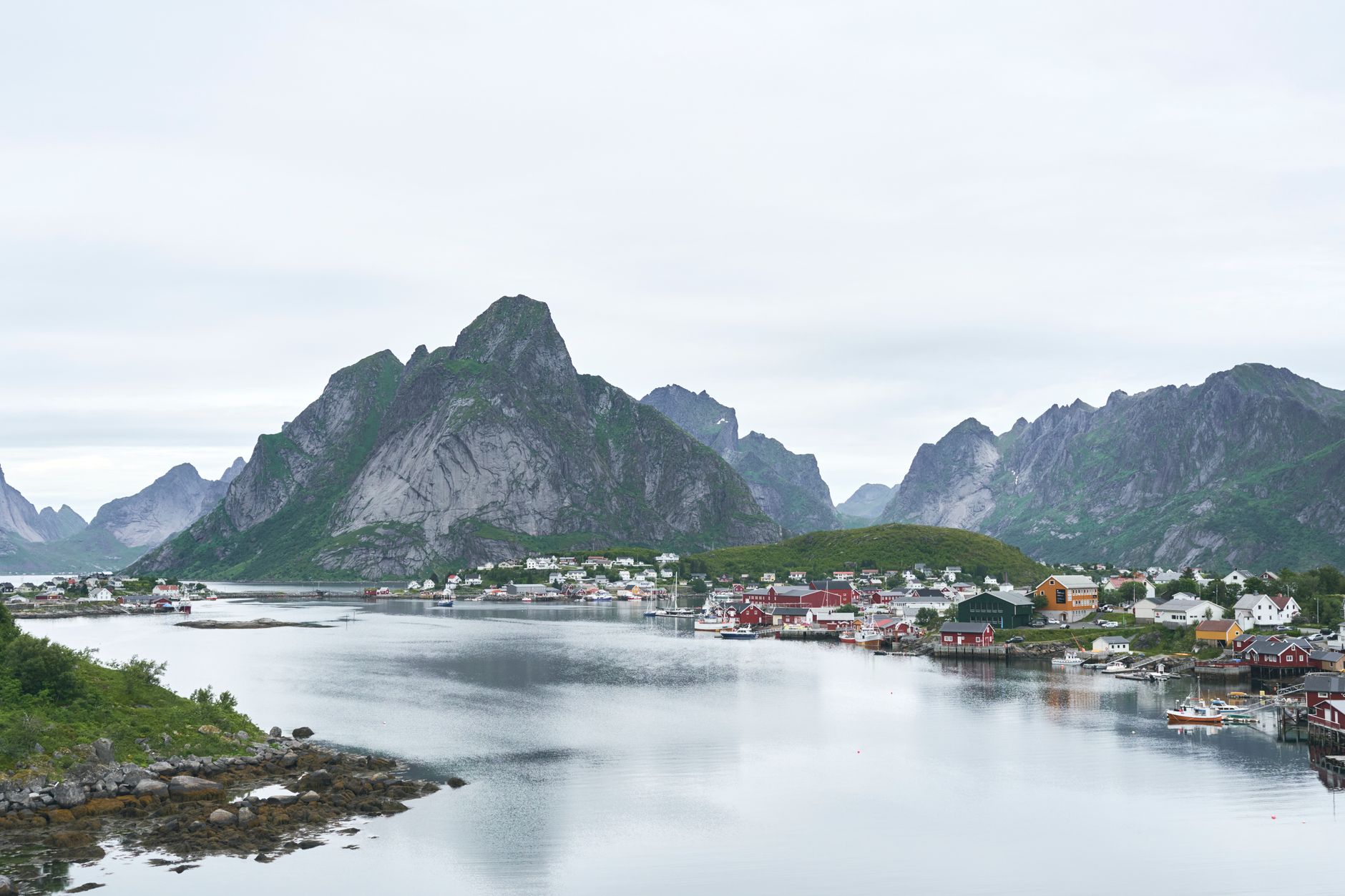
Table of Contents
To approach Lofoten across the Vestfjorden in late autumn is to witness what nineteenth-century mariners called the Lofotveggen—an unbroken, jagged battlements of dark rock rising a thousand meters directly from the Atlantic froth. Here, north of the Arctic Circle, sunlight does not set in summer, and in winter, it retreats entirely into a continuous blue twilight that locals call the mørketid.
1. The Granite Wall of Vestfjorden
The road network through Lofoten—principally the E10 highway—is an engineering marvel of bridges and undersea tunnels. Yet the moment one leaves the asphalt for the walking trails around Reinebringen or Nusfjord, civilization recedes immediately. The tundra crunching underfoot is soaked with autumn rain, smelling of cold peat, bog bilberries, and maritime ozone.
“Out on the outer rocks, the wind carries no ambient human murmur—only the cry of kittiwakes and the heavy thud of swells that began their journey in Greenland.”
2. Red Ochre and Pine: The Architecture of Rorbuer
Historically, the fishermen who sailed from across mainland Norway to harvest the winter cod needed shelter. The resulting rorbuer—timber cabins built on stilts half-over the water—remain the architectural soul of the islands. Traditionally painted in deep falu red (the cheapest pigment available, made with cod-liver oil and mineral iron), these structures offered warmth during storms that would splinter lesser dwellings.
Today, staying in a preserved rorbu in Hamnøy or Å means falling asleep to the rhythmic slap of tides against timber piles and the comforting roar of a cast-iron stove fed with birch logs.
3. The Salted Harvest and Arctic Winter
For more than a thousand years, dried cod (skrei) has fueled Lofoten’s economy, once serving as the primary currency traded through the Hanseatic League in Bergen. Huge wooden drying racks, shaped like giant A-frames, dominate the harbor approaches. Between February and May, the ocean wind cures the fish without salt or smoke—a preservation technique unaltered since Viking longships plied these sounds.
4. Field Guide & Itinerary Notes
When to Go: September and October offer golden tundra colors, fewer crowds, and the earliest appearances of the northern lights. February to April provides pristine snow cover and dramatic winter fishing activity.
Getting There: Fly into Bodø and take the passenger ferry to Moskenes, or fly via Evenes (EVE) and hire an all-wheel-drive vehicle equipped with studded winter tires.